Which Foundation Cracks Matter
Hairline, diagonal, stair-step or horizontal: the shape and position of a crack tell you more than its length does. Here is how to read the ones in your Fort Worth house before anyone quotes you for work.
- Referral Service
- Slab & Pier and Beam
- Residential & Commercial
By Fort Worth Foundation Repair Pros · Updated September 2026
Width, Direction and History
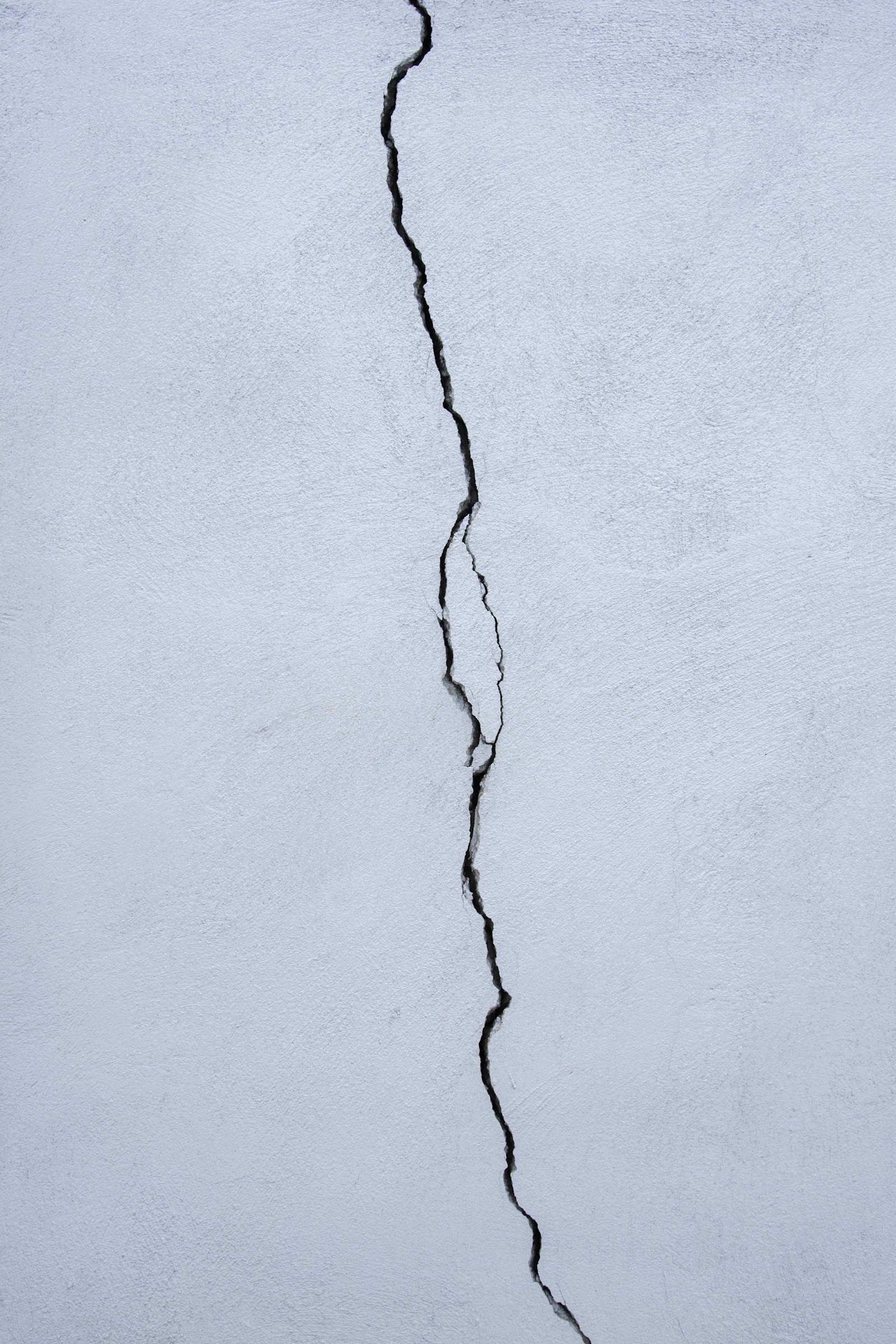
Three things make a crack interesting. How wide it is, which way it runs, and whether it is new. A hairline you could barely trace with a pencil is a different animal from one you can slip a coin into. A crack that runs diagonally is under a different stress from one that runs straight down. And a crack that appeared last summer matters far more than one in the same place since the 1970s.
The easy way to settle the third question is to photograph it with a ruler or a coin beside it and date the photo. Do it again after the next wet season. If nothing has changed, you have learned something genuinely useful without spending a thing.
Diagonal Cracks From Window and Door Corners
These are the ones worth taking seriously. Openings are weak points, so when a section of wall racks, the stress runs out from the corners at roughly forty-five degrees. A diagonal crack climbing from the top corner of a door or window, especially if the door below it has started sticking, is the classic differential-settlement signature.
One short diagonal above a single window in an old house is not a crisis. Several of them, all on the same side of the house, all pointing the same way, is a pattern that should be measured.
Stair-Step Cracks in Brick
Brick cannot crack diagonally through the units easily, so it cracks along the mortar joints instead, producing the stepped zigzag you see running up the outside of houses all over North Texas. It means the same thing as a diagonal crack inside: one part of the wall has moved relative to another.
Look at where the step is widest. Usually the gap opens wider at one end, and that end points toward the part of the house that has dropped. Also check whether the mortar in the crack is fresh or weathered, since that tells you roughly how long it has been open.
Vertical and Horizontal Cracks
Vertical cracks are the most common and often the least alarming. Concrete shrinks as it cures and cracks as it does so, and vertical cracking in a slab edge or a foundation wall is frequently just that. Width is what changes the verdict: a narrow, stable vertical crack is usually cosmetic, a wide one that is offset, with one side sitting proud of the other, is not.
Horizontal cracks are the exception to the rule that thin cracks are fine. A horizontal crack running along a foundation wall or stem wall can indicate lateral pressure from soil pushing against it, and that is worth having looked at promptly rather than watched for a season.
Cracks in Slabs, Driveways and Tile
Cracks in an exposed garage or patio slab are very common and mostly represent shrinkage or the slab moving independently of the house. Driveways crack for their own reasons entirely. Neither is strong evidence about the foundation under your living space.
Cracked floor tile inside is more interesting when the break runs in a line across several tiles rather than at one spot, because that usually means the surface under it has moved rather than one tile being poorly bedded. The same goes for a consistent gap opening under baseboards along a run of wall.
What Cracks Cannot Tell You
Here is the honest limit of all of this: you cannot determine how far a house is off level by looking at cracks. Two houses with identical brick cracking can have completely different elevation profiles, and the repair for one may be nothing at all. Cracks tell you where to look; measurements tell you what to do.
That is also why patching is not a fix. Filling a crack that is still moving simply hides the evidence, and it will reopen. Fill cosmetic cracks once you know they are cosmetic, not before.
Reading Cracks in Fort Worth Houses
Around Fort Worth, the age of the house shapes what you see. The 1920s to 1950s streets close in are largely pier-and-beam, where movement shows as sloping floors, gaps at baseboards and plaster cracking rather than brick stepping. The postwar suburbs and everything newer are slab-on-grade, where brick stair-stepping and diagonal drywall cracks are the usual language.
Older slabs like the 1960s to 1990s housing in North Richland Hills have been through several drought cycles, so cumulative cracking is common and it is genuinely hard to tell old from new without a dated photograph or a survey.
Arrange an Inspection
If a crack is wider than a coin edge, has one side offset from the other, runs horizontally, or has visibly changed in the last year, have elevations taken. If it is a stable hairline you have photographed and nothing has moved, you can reasonably patch it and keep watching.
Ask any provider to measure rather than guess. See what a foundation inspection covers, read how supports differ in our guide to pressed concrete versus steel piers, or call about a visit and bring your dated photographs with you.