Foundation Problem Warning Signs
Not every crack in an older Fort Worth house means trouble. Here is what actually indicates the foundation is moving, what is just an old building being old, and how to tell the difference before you pay anyone.
- Referral Service
- Slab & Pier and Beam
- Residential & Commercial
By Fort Worth Foundation Repair Pros · Updated September 2026
Start With the Doors, Not the Cracks
Doors are the most honest thing in a house. They are hung square in a frame, and if the frame racks even slightly they stop fitting. So the first useful observation is not a crack, it is a door that used to close and now scrapes the latch side, or a front door that needs a shoulder in August and swings freely again in March.
That seasonal pattern matters enormously. A door that binds every dry summer and frees up after a wet spring is telling you the clay under one part of the house is shrinking and swelling on a cycle. A door that got worse last year and has stayed worse is telling you something different: the house has moved and not come back.
Cracks Worth Paying Attention To
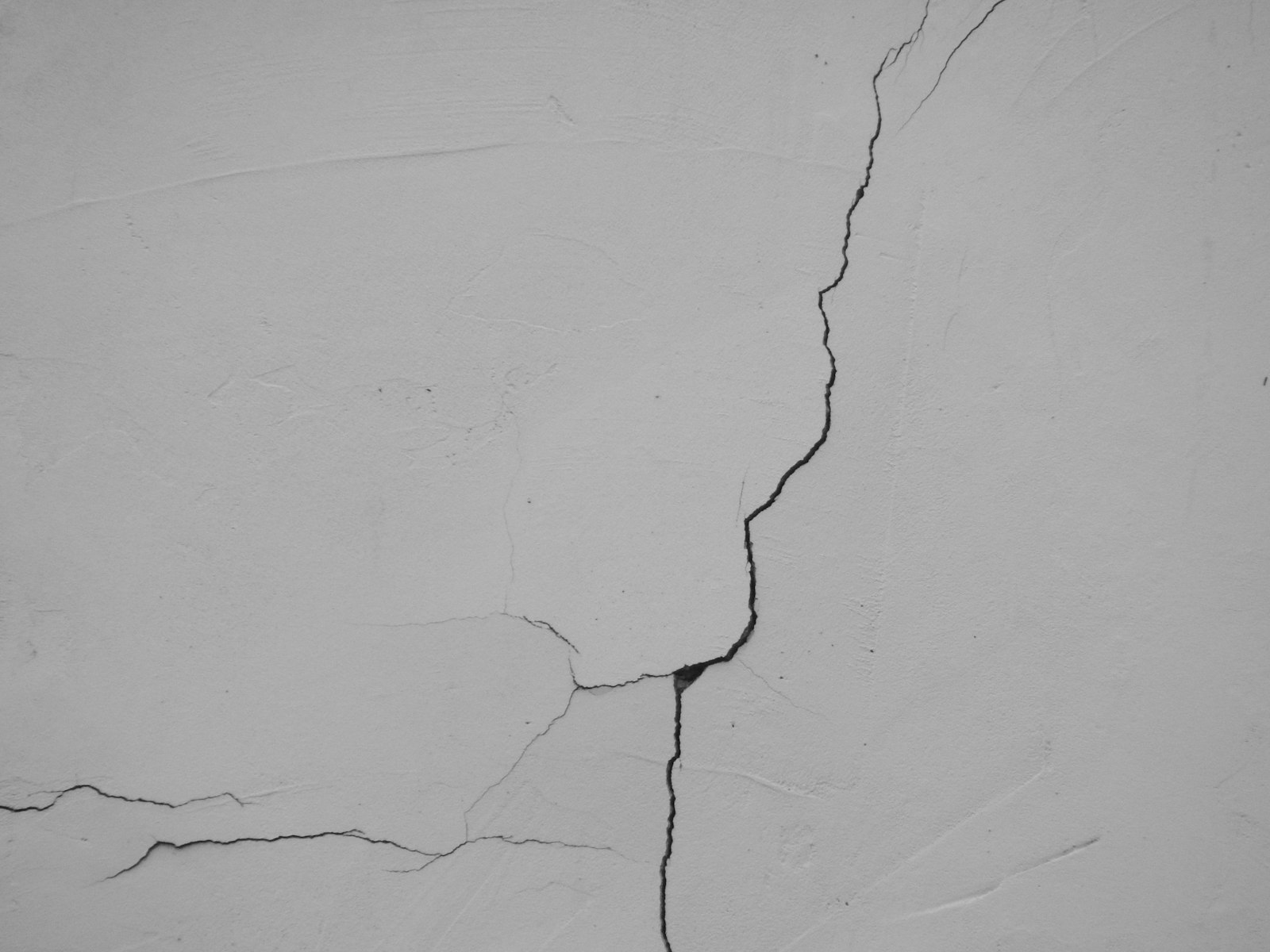
Movement concentrates stress at the corners of openings, so that is where it shows. Diagonal cracks running up and out from the top corner of a door or window, stair-step cracking following the mortar joints in brick, and separation where the brick meets a window frame are the classic three. Width matters more than length: a hairline that has been there for twenty years is not the same as a crack you can get a fingernail into that appeared last summer.
Cracks that have obviously been patched before and have opened again are the single most useful thing you can show an inspector. Somebody already decided that crack mattered, and the house has since proved them right. Our guide to which foundation cracks matter goes through the shapes in more detail.
Floors, Trim and the Fireplace
Inside, put a marble or a small ball on the floor in several rooms. If it rolls in a consistent direction across the house, that is a slope worth measuring rather than a quirk of one room. On pier-and-beam houses, a hallway that feels springy underfoot points at beams and piers rather than at anything in the slab, because there is no slab.
Look at where trim meets trim at inside corners, where crown molding meets the ceiling, and where a brick fireplace or chimney meets the exterior wall. Separation in those places means one part of the structure has moved relative to another. A chimney pulling away from the house is one of the clearer signs that a corner has dropped.
Signs From Outside the House
Walk the perimeter after a good rain and see where water sits. Ground that stays soaked on one side and bakes into an open gap along the slab edge on another is the mechanism behind most of the movement in North Texas, not a separate issue. Downspouts dumping straight onto the soil beside a wall, beds graded back toward the house, and a large oak within its own height of the foundation are all worth noting.
Check the slab edge itself where you can see it. A visible step or a gap opening between the concrete and the brick above it is direct evidence. So is a patio, driveway or porch slab that has separated from the house, although those move on their own too and are less conclusive.
What Is Not Usually a Foundation Problem
Plenty of cracking is cosmetic. Fine cracks at drywall seams and above doors in a house of any age are often just materials moving with humidity and temperature. Hairline shrinkage cracks in a slab or driveway are normal in concrete and, by themselves, tell you nothing about settlement. Nail pops, a single cracked floor tile and mortar weathering on an old chimney are not structural evidence either.
The pattern is what counts. One symptom on its own is weak. Sticking doors plus stair-step brick cracking plus a floor that slopes, all on the same side of the house, is a pattern, and it is worth measuring.
Foundation Movement Around Fort Worth
Most foundation movement across Fort Worth comes down to the same thing: expansive clay east and south of the city that swells with a wet spring and shrinks through a dry August, under houses that are mostly slab-on-grade if they were built after the 1960s and pier-and-beam if they were built before. Add drought summers, mature post oaks and drainage that was fine until somebody added a patio, and you have the local recipe.
It varies within a short drive. Out in Keller, thirty-year-old oaks around 1990s homes are a regular factor, while west into Parker County the soil turns sandy and behaves differently again. That is why the answer always comes from readings taken at your address rather than from a rule of thumb.
Arrange an Inspection
If two or three of these signs line up on the same side of the house, get elevations measured and written down. A dated survey either confirms there is a real problem or gives you a baseline that proves next year whether anything is still moving, and that is worth having either way.
An independent provider can take those readings and explain what they show. See what a foundation inspection involves, read about slab foundation repair if the house is on a slab, or call about a visit. Please do not attempt to jack, shim or shore any part of the house yourself while you wait.